
"A handshake is good, but writing protects you"
In some places a handshake is enough. In the US, if it isn’t written and signed it quickly becomes your word against the contractor’s. “Paper speaks.” A signed document is the only proof of what was agreed when questions or claims appear later.
Mistake #1: Starting work without a contract
If something goes wrong you can’t prove what they were supposed to deliver or what you owed.
Mistake #2: Signing something that doesn’t match the approved scope
The contractor signs a generic document and later says certain items “weren’t included.”
Mistake #3: Not defining how changes or delays are handled
When something changes there are no written rules and everything becomes a heated negotiation.
Why you need a formal contract even for small projects
Many homeowners trust verbal agreements or WhatsApp messages. That works while everything goes well. But when something goes wrong, there's nothing solid to back you up. A formal contract, even if digital and brief, is the tool that protects you as a client.
The 5 critical elements of a good contract
- Clear detailed scope: What will be done, with what materials, in which areas and quality standards.
- Defined dates and timeline: When it starts, when it ends and what happens if there are justified or unjustified delays.
- Payment conditions: Total amount, how it's divided (deposit, progress, final) and under what conditions payments are released.
- Warranties offered: What contractor guarantees (materials, labor, equipment) and for how long.
- What happens if something goes wrong: How disputes are resolved, who assumes correction costs and under what timelines.
Digital signature vs paper: why digital is better
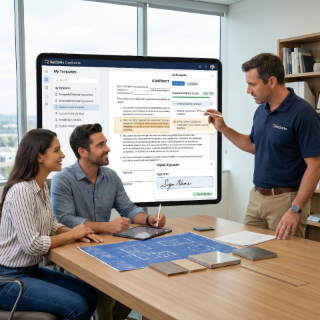
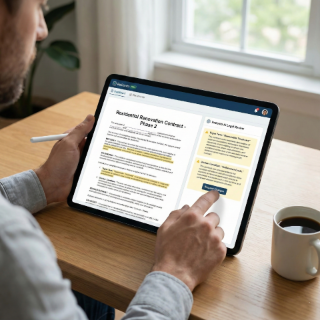
In ReConto you can sign with full legal validity from your account. Faster, more secure and no need to print or scan.
Compared to paper:
- ✅ Won't lose the contract (always in your account)
- ✅ Access from any device
- ✅ Exact date and time of signature
- ✅ Both parties have same version
- ✅ Easy to share with lawyer, insurance or bank if needed
What if the contractor won't sign a contract?
That's a huge red flag. A serious contractor has no problem signing a contract that reflects what was verbally agreed. If they refuse or say "it's not necessary" or "trust me," they probably don't want to assume written responsibility.
Better to find out before you're mid-project. If a contractor refuses to sign, find another one.