

Phase 3: Work plan – See the path of your project

What happens first and what comes after?

Your contractor builds the plan in ReConto and you review it in a clear board with phases, dates and owners.

❌ The Problem

  • Budget approved, but nobody knows the order of tasks.
  • Daily “when is the electrician coming?” questions with no clear answer.

"Without a plan, every delay feels like improvisation."

✅ The Solution

  • ReConto turns the agreed scope into a visual plan with phases and tasks.
  • You see who owns each activity, how long it takes and what depends on what.

"When everyone sees the same path, nobody gets lost."

📊 The Result

  • Fewer status calls and fewer made-up dates.
  • You can prepare rooms, coordinate deliveries and notice changes before they snowball.

A clear plan = a shorter, calmer project.

Your project doesn’t need guesses, it needs a map

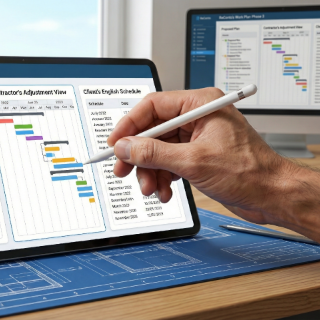
The ReConto work plan translates everything agreed in Phase 1 and 2 into a real route: phases, tasks, owners and estimated durations. You immediately see what will happen each week and what must be ready before moving forward.
ReConto work plan view

Phases, tasks and owners in one place

Your contractor defines the plan in ReConto, you check it from your phone or laptop. If something changes, the plan updates and everyone sees the latest version—no PDFs or screenshots lost in chats.

Visual plan

Phases and tasks in logical order so you understand the sequence.


Clear owners

Know who executes each activity: contractor, subcontractor or yourself.


Estimated dates

Tentative dates so you can prepare the space or deliveries.

Benefits of the work plan in ReConto

And more

Dependencies

See what must be finished before the next step starts.


Automatic updates

If the plan changes, you get notified and everyone sees the new version.

Benefits of the work plan in ReConto

How Phase 3 – Work plan works

  1. 1

    Your contractor creates the plan inside ReConto from the approved scope.

  2. 2

    You review and approve the sequence: phases, duration and owners.

  3. 3

    The plan stays available to you, your family and the contractor at all times.

  4. 4

    If there are changes, the plan updates and you get notified.

  5. 5

    Once work starts, the plan becomes the reference for Phase 4 tracking.

Work plan use cases

How homeowners use the visual plan

  • Kitchen remodel: break down demo, rough-in, finishes and handoff.

  • Landscaping: separate design, prep, irrigation and planting.

  • HVAC replacement: coordinate permits, installation and testing without overlap.

  • Home addition: control structure, systems and finishes with clear dependencies.

Planning isn’t bureaucracy—it’s how you save time

Many home projects start with excitement but no clear route. Payments and materials get approved, yet nobody knows what happens next week. That creates delays, last-minute changes and anxious homeowners.

With a visible plan you can anticipate visits, prep rooms, coordinate deliveries and spot issues early. You don’t need complicated software; ReConto shows you the same version your contractor already uses with the crew.

What you should always know before starting

  • Which tasks happen first and which depend on others?
  • Who is responsible for each activity?
  • How long is each block of work estimated to take?
  • What must be ready (materials, permits, access) before moving forward?

If any of these answers are missing, ask your contractor to add them in ReConto. Better to clarify now than when the crew is already at your home.

Use the plan to your advantage

Go back to the plan whenever a change is announced or someone asks “when will we finish?”. The plan doesn’t just answer the date—it shows the impact of moving a task or adding extra work.

Work plan FAQs

No. Your contractor creates it in ReConto. You simply review it, ask questions and approve the final version.

The plan updates, everyone sees the new sequence and you understand how it impacts the rest of the project.

Yes. Anyone with access to your ReConto project can see the plan and prepare the space when needed.

It depends on the project. Large remodels benefit from phase-by-phase detail; smaller jobs just need the key steps and dates. The important part is reflecting reality.